Carter had started to work as weekend sports photographer in 1983. In 1984 he moved on to work for the Johannesburg Star, bent on exposing the brutality of apatheid.
Carter was the first to photograph a public execution by “necklacing” in South Africa in the mid-1980s. He later spoke of the images; “I was appalled at what they were doing. I was appalled at what I was doing. But then people started talking about those pictures… then I felt that maybe my actions hadn’t been at all bad. Being a witness to something this horrible wasn’t necessarily such a bad thing to do.”
In March 1993 Carter made a trip to southern Sudan. Carter’s most famous photograph was of a young emaciated Sudanese toddler. The girl had stopped to rest while struggling to a feeding center, wherein a vulture had landed nearby. He said that he waited about 20 minutes, hoping that the vulture would spread its wings. It didn’t. Carter snapped the haunting photograph and chased the vulture away. However, he also came under heavy criticism for just photographing — and not helping — the little girl.
The photograph was sold to The New York Times. Practically overnight hundreds of people contacted the newspaper to ask whether the child had survived, leading the newspaper to run a special editor’s note saying the girl had enough strength to walk away from the vulture, but that her ultimate fate was unknown.
]]> 
Adams won the 1969 Pulitzer Prize for Spot News Photography and a World Press Photo award for the photograph (captioned ‘General Nguyen Ngoc Loan executing a Viet Cong prisoner in Saigon’), but would later lament its notoriety.
Adams wrote in Time:
- The general killed the Viet Cong; I killed the general with my camera. Still photographs are the most powerful weapon in the world. People believe them; but photographs do lie, even without manipulation. They are only half-truths.
- What the photograph didn’t say was, ‘What would you do if you were the general at that time and place on that hot day, and you caught the so-called bad guy after he blew away one, two or three American people?’
Adams later apologized in person to General Nguyen and his family for the irreparable damage it did to Loan’s honor while he was alive. When Nguyen died, Adams praised him as a “hero” of a “just cause”.
He once said that “I would have rather been known more for the series of photographs I shot of 48 Vietnamese refugees who managed to sail to Thailand in a 30-foot boat, only to be towed back to the open seas by Thai marines.” The photographs, and accompanying reports, helped persuade then President Jimmy Carter to grant the nearly 200,000 Vietnamese boat people asylum. He won the robert Capa Gold Medal from the Overseas Press Club in 1977 for these series of photographs in his photo essay, “The Boat of No Smiles”. Adams remarked, “It did some good and nobody got hurt.”
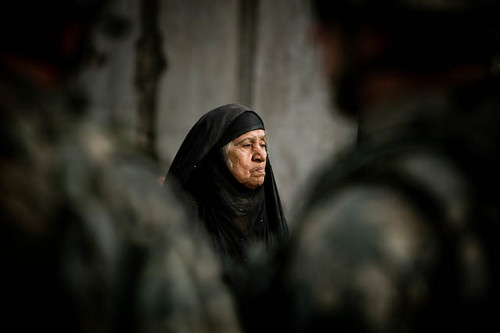
]]>His work first won critical acclaim in the early 1990s when his photo series on homeless life in the United States was selected to tour the country in the Songs of The People project. He was also named Photojournalist of The Year in 2006 as well as winning the VII Photo Agency Portfolio Contest. He was among the photographers in World Picture News Networks Most Powerful Imagery of 2006.
As an adult, his images of conflict in Iraq, Afghanistan, The Gaza Strip and Lebanon have been widely published and have traveled to many countries around the world in museums and fine art galleries. His style of dark and moody imagery has become a trademark and he often releases feature stories containing graphic imagery of war, disease, social issues and strife which are considered both powerful and compassionate.
]]>
Annie Leibovitz’s Personal Collection
Over 150 striking images document Annie Leibovitz’s illustrious career as a photographer alongside intimate insights into her private life.
The photographs are arranged chronologically, with iconic portraits of famous public figures interspersed with personal photographs of her family and close friends.
Leibovitz’s personal collection forms the heart of the exhibition and records key moments in her life, including the birth and childhood of her 3 daughters.
Annie Leibovitz’s Celebrity Portraits
Working for Rolling Stone, Vanity Fair and Vogue, Annie Leibovitz has built up a legendary body of work.
In addition to her magazine work, Leibovitz has created striking advertising campaigns for the likes of American Express, Gap and Givenchy.
The exhibition features many of Leibovitz’s renowned celebrity portraits, including:
- Jamie Foxx
- Daniel Day Lewis
- Al Pacino
- Nicole Kidman
- Brad Pitt
Leibovitz’s assignment work on display includes searing reportage from Sarajevo in the 1990s and the election of Hillary Clinton to the US Senate.
]]>Delahaye started his career as a photojournalist. He joined the photo agency Sipa Press in the mid 80s and dedicated himself to war reporting. In 1994, he joined the cooperative Magnum Photos and Newsweek Magazine.
He distinguished himself during the 1980s and 1990s in Lebanon, Afghanistan, Yugoslavia, Rwanda or Chechnya. His war photography was characterized by its raw, direct recording of news and often combined a perilous closeness to events with an intellectual detachment in the questioning of his own presence. This concern was later mirrored in minimalist series published as books, notably Portrait/1, a set of photobooth portraits of homeless people and L’Autre, a series of stolen portraits made in the Paris subway. With Winterreise, he explored the social consequences of the economic depression in Russia. In 2001, Delahaye conducted a radical formal change and began a new series. Shot at the scenes of wars and global events using large and medium formatcameras and sometimes edited on computers, his pictures are produced at an imposing size and shown in museums. While exploring the boundaries between reality and the imaginary, they constitute documents-monuments of immediate history, and urge reflection “upon the relationships among art, history and information”
]]>I set up my exhibition at the Ritzy on Wednesday. Just incase you don’t know the Ritzy is one of the oldest independant picturehouses in London and has an exhibition space on the ground floor. There is also a huge film festival taking place form the 15th October. So I am sure there will be a good selection of people coming through the door.
I respect the Ritzy it’s giant slabs of cake and good quality coffee that it produces are the best in Brixton. If you get a chance please take a trip to take a peek at my photographs and eat a piece of scrumptious cake!
Enjoy,
Laura
]]>Rolling Stone magazine
When Annie Leibovitz returned to America in 1970, she worked for the recently-launched Rolling Stones magazine. In 1973, publisher Jann Wenner named Leibovitz chief photographer of Rolling Stone. Leibovitz worked for the magazine until 1983, and her intimate photographs of celebrities helped define the Rolling Stone look. In 1975, Leibovitz served as a concert-tour photographer for The Rolling Stones Tour of the Americas.
Vanity Fair magazine
Since 1983, Leibovitz has worked as a featured portrait photographer for Vanity Fair.
Lennon and Ono
On December 8 1980 Leibovitz had a photo shoot with John Lennon for Rolling Stone, promising him he would make the cover. After she had initially tried to get a picture with just Lennon alone (she would recall that, “nobody wanted [Ono] on the cover.”), Lennon insisted that both he and Yoko Ono be on the cover. Leibovitz then tried to recreate the kissing scene from the Double Fantasy album cover, a picture that she loved. “What is interesting is she said she’d take her top off and I said, ‘Leave everything on’…not really preconceiving the picture at all. Then he curled up next to her and it was very, very strong. You couldn’t help but feel that she was cold and he looked like he was clinging on to her. I shot some test Polaroids first and when I showed them to John and Yoko, John said, ‘You’ve captured our relationship exactly. Promise me it’ll be on the cover.’ I looked him in the eye and we shook on it.” She was the last person to professionally photograph Lennon — he was shot and killed five hours later.
]]>He has given many lectures at universities such as Stanford, George Washington, South California, Beijing, Istanbul. National Geographic television has produced several films portraying Reza and his photographic and humanitarian work. If that isn’t enough he received an Emmy Academy Award in 2002.
In 1991, Reza and his brother founded a Photo Agency, which has been distributing their own archives but also those of several other photographers. Having been a consultant to the United Nations in Afghanistan in 1990, being culturally close to this country and particularly being a journalist led Reza to found AINA. The NGO Aina, that is based in Paris, Kaboul and Washington D.C., struggles for developing a civil society and cultural expression by empowering media and communication. In November 2005 Reza was honoured with the title of “Chevalier de l’Ordre du Mérite”, the French award for distinguished services in a public or private capacity.
He also was awarded the prestigious “Missouri Honor Medal for Distinguished Services in Journalism” from the Missouri School of Journalism in “recognition of his lifelong contributions, through brilliant photojournalism, to justice and dignity for the world’s citizens”.
]]>Kertész’s early work was mostly published in magazines. This continued until much later in his life when he stopped accepting commissions. He served briefly in WWI and moved to Paris in 1925, against the wishes of his family. There he was involved in the artistic melting pot of immigrants and the Dada movement. The imminent threat of World War II pushed him to emigrate again to the US. He took offense with several editors, who he felt did not recognize his work. Despite the numerous awards he collected over the years, he still felt unrecognized, a sentiment which did not change even at the time of his death. His career is generally divided into four periods based on where his work was most prominent at these times. They are called the Hungarian period, the French period, the American period and, towards the end of his life, the International period.
Kertész bought his first camera (an ICA box camera) in 1912, as soon as he had earned enough money, despite his family’s protests to continue his career in business. In his free time away from work, he began taking photographs of the local peasants, gypsies, and landscape of the surrounding Hungarian Plains (the puszta).
Kertész emigrated to Paris in September 1925 against his mother’s wishes, leaving her behind along with both his brothers, his wife and his uncle Lipót, who died shortly thereafter. Jen? also left Hungary to live in Aregntina, but Elizabeth remained until her future husband was well established in Paris and they could live together. Kertész was certainly not the only artist emigrating to Paris; Man Ray, Germaine Krull (who also took part in exhibitions with Kertész) and Lucien Aigner all emigrated there during this period. In Paris he found critical and commercial success with magazine publications after doing commissioned work for several magazines across Europe from Germany to France to Italy.
Kertész’s work itself is often described as predominantly utilising light and even Kertész himself said that he writes with light. He was never considered to “comment” on his subjects, but rather capture them – this is often cited as why his work is often overlooked; he stuck to no political agenda and offered no deeper thought to his photographs other than the simplicity of life.
]]>Gertrude Duby was a photojournalist and anti-fascist organizer during WWII. In 1940, weary of war, she journeyed to Mexico, where she decided to reinvent herself as a jungle explorer. She bought an old camera and taught herself to use it. Then in 1943, she convinced a government official to let her join an expedition in search of the legendary Lacandon Maya.
The only Maya never conquered by the Spanish, the Lacandon had lived free for centuries deep in the Chiapas jungle. They were rarely photographed and only had sporatic contact with the outside world. Not only did Blom photograph the Lacandon and write a book about her experiences with them.
The systematic deforestation of La Selva Lacandona by loggers, immigrant settlers, and the Mexican government changed the direction of her life yet again. In the 1970s, Blom decided she must speak out, and thus became one of the first environmental activists. She traveled the world, lecturing from first-hand experience about the death of the jungle and showing slide shows of her documentary photographs. In three languages, she wrote hundreds of articles protesting Mexican policies. In 1975 she started El Vivero, a tree nursery that still distributes free trees for reforestation.
]]>